Are you towing a trailer with a load that extends beyond the trailer bed? Then it's important to understand the regulations before you set off. Not only will this help you avoid fines, but it will also make your journey safer for everyone on the road. The maximum permitted overhang depends on the type of load you are carrying: divisible or indivisible.
In this guide, you'll learn how far a load is allowed to overhang, when a warning board is required and what to check before hitting the road.
Why are there rules for overhanging loads?
An overhanging load can create hazardous situations for other road users. That's why legislation sets limits on the maximum dimensions of a load carried on a trailer. Exceeding these limits not only increases the risk of receiving a fine, but also raises the likelihood of accidents.
Before every journey, make sure your load remains within the legal dimensions and is properly secured.
Divisible vs. indivisible loads: what's the difference?
The law distinguishes between divisible and indivisible loads. This distinction determines how far a load may legally extend beyond the trailer.
Divisible loads
Divisible loads consist of goods that can easily be split into smaller parts or dismantled without causing damage. Examples include:
- Boxes or parcels
- Building materials
- Flat-pack or dismantlable furniture
- Loose components
Because these loads can be reduced in size, they are subject to the strictest regulations. Simply put: if the load can be made smaller, it shouldn't need to overhang.
Indivisible loads
Indivisible loads cannot be shortened or dismantled without damaging the item or affecting its intended function. Examples include:
- Ladders
- Long poles
- Steel profiles
- Beams
- Pipes
Since these loads cannot realistically be reduced in size, the regulations are slightly more flexible.
How far may a load overhang on a trailer?
Divisible loads
If you're transporting a divisible load, the following limits apply:
- Front: the load must not overhang.
- Sides: a maximum overhang of 20 centimetres.
- Rear: a maximum overhang of 1 metre.
If the load extends beyond these limits, the trailer combination no longer complies with the legal requirements.
Indivisible loads
Different rules apply to indivisible loads:
- Front: the load must not overhang.
- Sides: an overhang of more than 20 centimetres is permitted, provided the total width of the trailer and load does not exceed 3 metres.
- Rear: in certain situations, the load may extend beyond 1 metre, up to a maximum of half the trailer's length, measured from the centre of the rear axle.
Always check before departure that your trailer and load remain within the permitted dimensions.
When is a warning board required?
If your load extends significantly beyond the trailer, you may be legally required to use a warning board.
A warning board is mandatory when:
- the load extends more than 1 metre beyond the front or rear of the trailer;
- the load protrudes more than 10 centimetres beyond the width of the vehicle (passenger cars excluded).
A warning board is square and features red and white diagonal stripes, making the overhanging load clearly visible to other road users, especially in poor weather conditions or after dark.
When is a warning board required?
If your load extends significantly beyond the trailer, you may be legally required to use a warning board.
A warning board is mandatory when:
- the load extends more than 1 metre beyond the front or rear of the trailer;
- the load protrudes more than 10 centimetres beyond the width of the vehicle (passenger cars excluded).
A warning board is square and features red and white diagonal stripes, making the overhanging load clearly visible to other road users, especially in poor weather conditions or after dark.
Tips for transporting overhanging loads safely
Complying with legal requirements is only part of the job. Proper load securing is just as important for ensuring a safe journey.
Follow these practical tips before setting off:
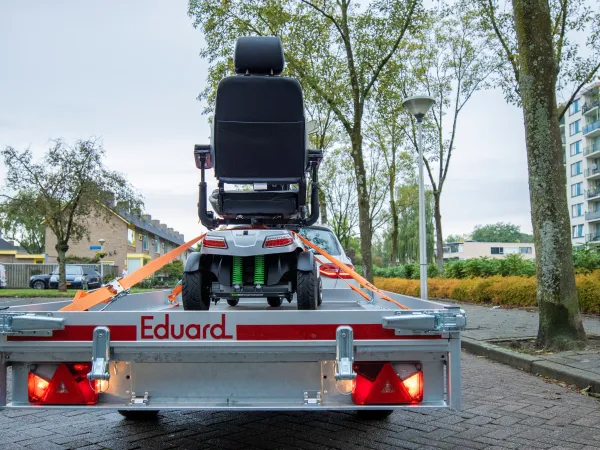
- Always secure your load using suitable ratchet straps or tie-downs.
- Distribute the weight evenly across the trailer.
- Check that the lights and number plate remain clearly visible.
- Allow for a longer braking distance when towing a heavily loaded trailer.
- Stop periodically during your journey to check that the load is still firmly secured.
Choose the right trailer for your load
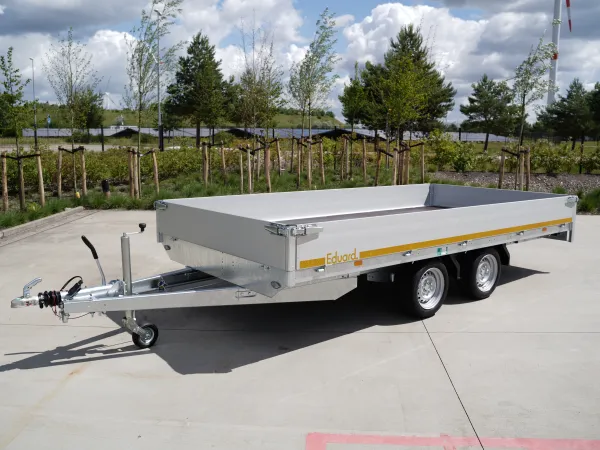
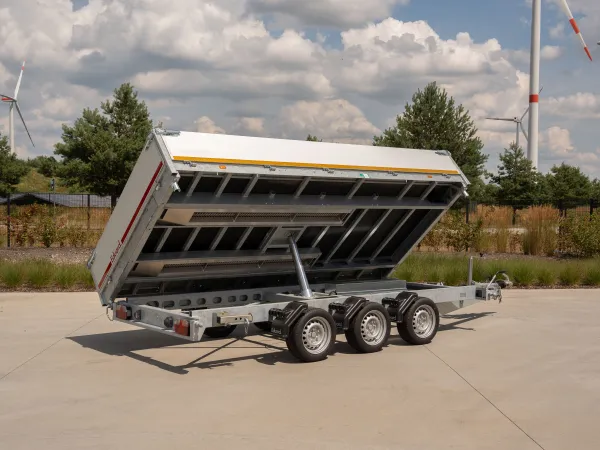
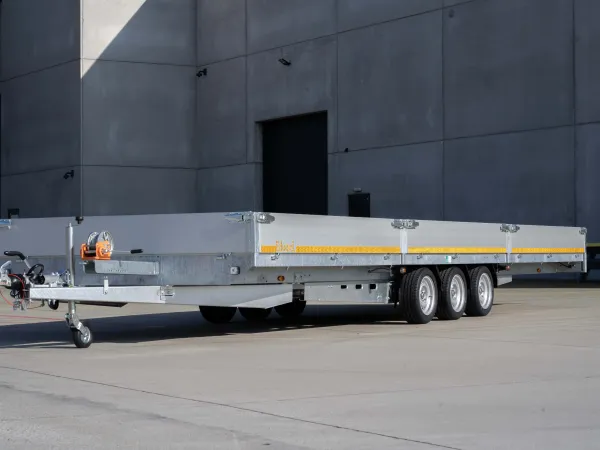
Do you regularly transport long materials? Choosing a trailer with the right dimensions makes all the difference. The correct trailer length and width help minimise unnecessary overhang, making transport safer, easier and more efficient.
Frequently Asked Questions about overhanging trailer loads
Can a load overhang at the front of a trailer?
No. A load must never extend beyond the front of a trailer.
How far may a load overhang at the rear of a trailer?
For divisible loads, the maximum rear overhang is 1 metre.
For indivisible loads, the permitted overhang may, in certain situations, exceed 1 metre, up to a maximum of half the trailer's length, measured from the centre of the rear axle.
When do I need to use a warning board?
A warning board is required when a load extends more than 1 metre beyond the trailer or protrudes more than 10 centimetres beyond the vehicle's width (excluding passenger cars).
Safe towing starts with proper preparation
Transporting an overhanging load doesn't have to be a problem—as long as you comply with the applicable regulations. Always check that your load remains within the legal dimensions, secure it properly and use a warning board whenever required. Doing so will help you avoid dangerous situations as well as unnecessary fines.
Not sure which trailer best suits your transport needs? Explore the EDUARD range using our online configurator and find the trailer that's perfectly matched to your requirements.
Or visit an EDUARD dealer near you for expert advice and personalized assistance.